
Good housekeeping is often viewed as a basic site requirement. In reality, it is an important part of how a project manages risk, resources and the working environment.
As the world marks World Cleanup Day, the principle behind the day offers a useful reminder for the construction industry: the environment in which we work are shaped by everyday actions. Keeping a construction site clean and organised may appear straightforward, but it can have a direct bearing on safety, resource efficiency, waste management and the way people take responsibility for their surroundings.
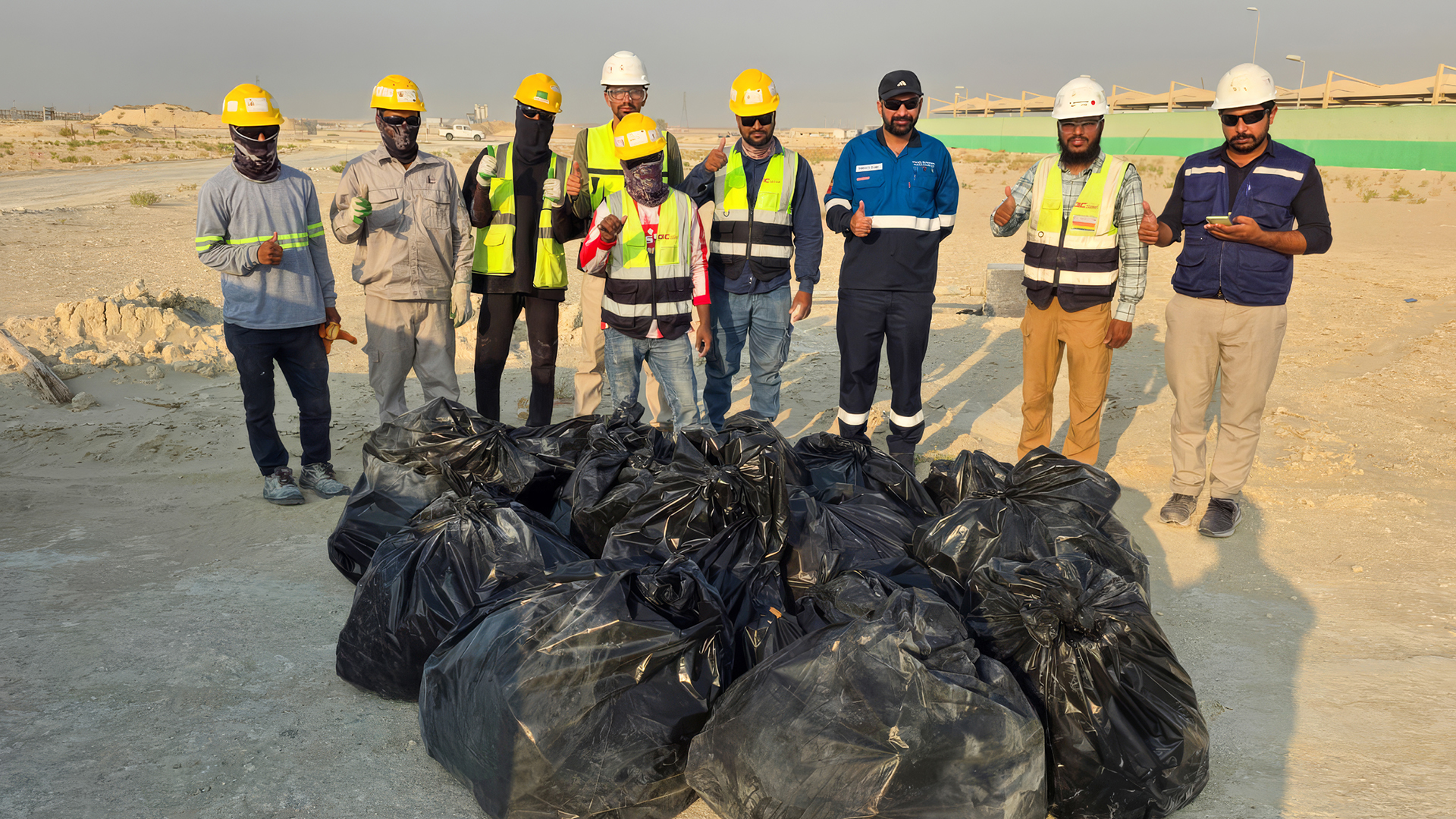
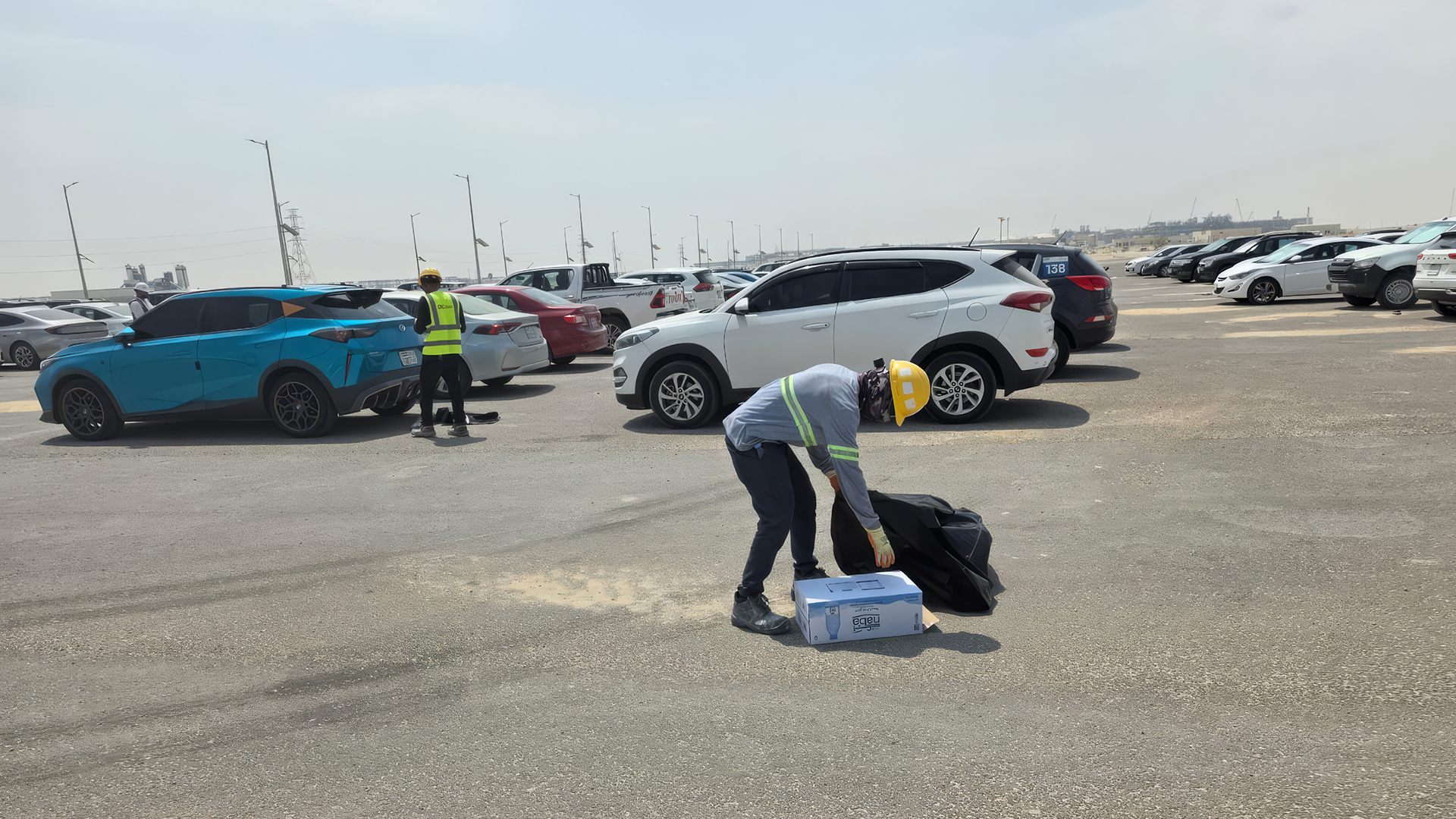
At a Douglas OHI project in Saudi Arabia, a mass housekeeping campaign was conducted in collaboration with the EPC team to improve cleanliness and workplace organisation. The campaign brought teams together around a simple but important objective: maintaining a workplace where materials, equipment and waste are managed responsibly, and potential hazards are addressed before they become incidents.
Housekeeping is fundamentally preventive. Materials left in walkways, poorly stored equipment, unmanaged waste and untidy work areas can create safety risks, restrict access and contribute to environmental issues. Maintaining an organised workplace helps identify and remove these conditions at source, rather than relying on corrective action after something has gone wrong.
This is particularly important on complex construction projects, where multiple activities take place simultaneously and site conditions can change throughout the working day. An area that is well organised at the start of a shift can quickly become congested as materials are delivered, equipment is moved and different trades complete their work. Good housekeeping therefore needs to be treated as an ongoing operational discipline, not a task carried out only when a work area becomes untidy.
There is also a clear sustainability dimension.
When materials, waste and equipment are properly organised, teams have greater visibility of what they have and how it is being used. Materials that might otherwise be discarded can be identified for reuse. Waste can be separated more effectively. Equipment can be stored and maintained appropriately, reducing unnecessary damage. Materials can also be protected from conditions that could make them unusable.
In this way, housekeeping supports better resource stewardship. It does not by itself solve the challenge of construction waste, but it creates the conditions for more responsible decisions about materials and resources.
The campaign also placed awareness at the centre of the initiative. By involving employees and working collaboratively with the EPC team, good housekeeping becomes a shared responsibility rather than something delegated to a particular function or team.
That distinction matters.
A sustainable workplace cannot be created by procedures alone. People need to understand the standards expected of them and recognise how their everyday actions affect safety, efficiency and the environment around them. When employees take responsibility for keeping their own work areas organised, identifying hazards and managing materials appropriately, housekeeping becomes part of the way work is performed rather than an additional activity imposed on teams.
The outcome was improved site cleanliness and workplace organisation, alongside greater employee awareness of good housekeeping practices. More importantly, the campaign reinforced the idea that everyone has a role in maintaining the conditions in which others work.
Linking action to the UN Sustainable Development Goals
The initiative supports SDG 8: Decent Work and Economic Growth, particularly its focus on safe and secure working environments. Good housekeeping is a practical component of maintaining safer workplaces, reducing avoidable hazards and supporting better working conditions.
It also supports SDG 12: Responsible Consumption and Production by encouraging more effective management of materials and waste. Better organisation can improve visibility of resources, support reuse and recycling, and help reduce unnecessary damage and disposal.
The connection with World Cleanup Day adds another dimension. While a construction site is very different from the public spaces and communities targeted by global clean-up initiatives, the underlying principle is similar: environmental responsibility is strengthened when people recognise that they have a role in maintaining the places in which they live and work.
Beyond the SDGs
The significance of housekeeping lies in its connection to operational discipline.
A well-organised workplace provides greater visibility of risks, makes materials easier to manage and can help teams work more efficiently. It also creates the conditions for better waste segregation, material reuse and environmental awareness.
This means housekeeping should not be viewed simply as a clean-up exercise. It is a practical way of reinforcing standards, educating employees and embedding responsible behaviours into everyday project operations.
It also demonstrates an important principle for sustainable construction: meaningful progress is not always the result of large or highly visible interventions. It can come from consistently doing the fundamentals well.
A housekeeping campaign may begin with clearing a work area, organising materials or removing waste. Its wider value comes from what happens next: people become more aware of their surroundings, hazards become easier to identify, resources become easier to manage and responsibility becomes more widely shared.
That is the connection between housekeeping and sustainability.
A clean and organised site is not simply a better-looking site. It is a site where people, materials and resources are being managed with greater care, where risks are more visible and where responsible behaviours can become part of the normal rhythm of project operations.
World Cleanup Day provides a timely reminder of that principle: the quality of our environment is influenced by the choices we make every day.

Copyright © 2026 Douglas OHI. All rights reserved.


